
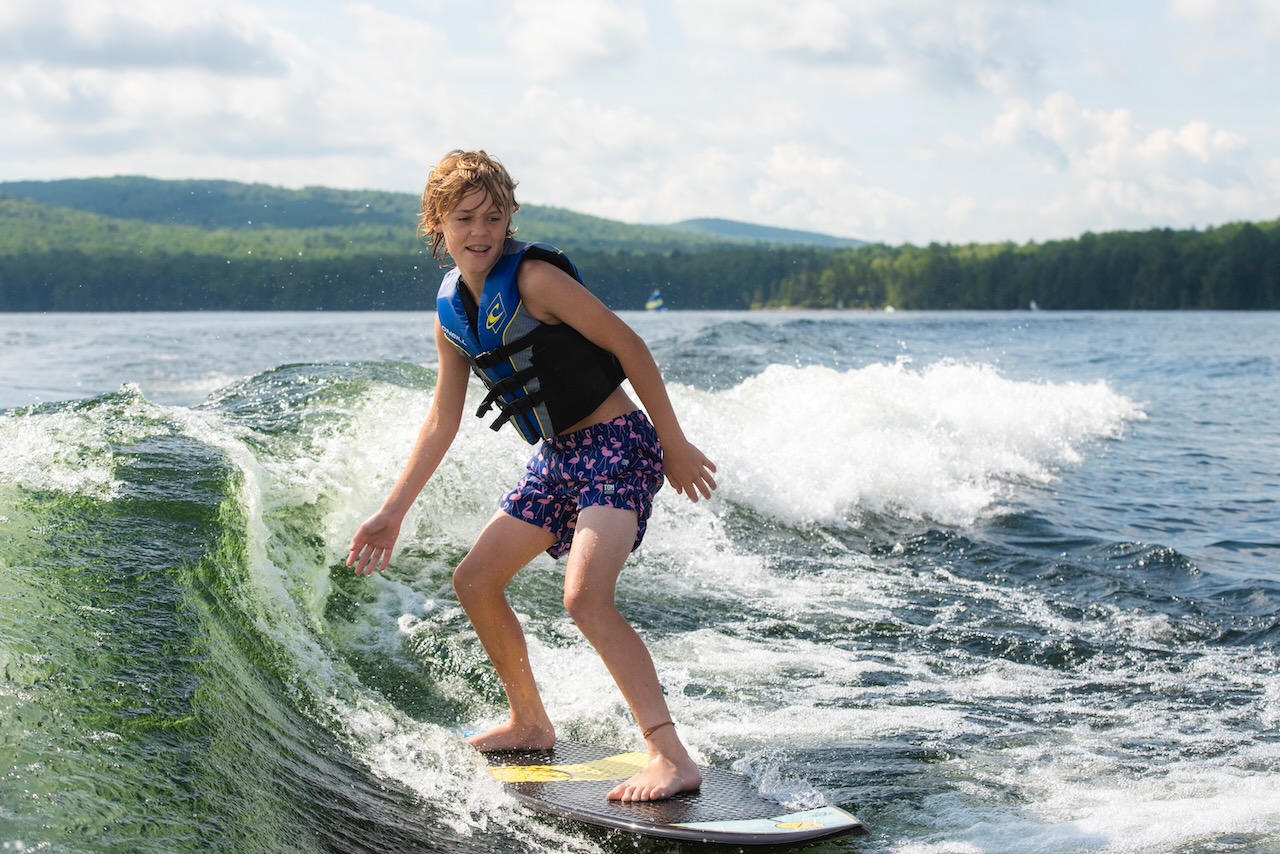
Kingswood has had a wakesurf program since 2022, when the Marvelle Family joined (or perhaps more accurately, rejoined) the Kingswood community. While we admittedly have not done our due diligence, we believe Nathan Marvelle has taught more people to wakesurf than anyone else in the Northeast. And more often than not, while Nathan is busy teaching the finer elements of wakesurfing, his wife Amanda Marvelle is driving the boat. Kingswood is incredibly lucky to have this power duo leading our wake surf program. Below is a Q & A with the Marvelles.
- For the uninitiated, what is wakesurfing? How does it differ from wakeboarding?
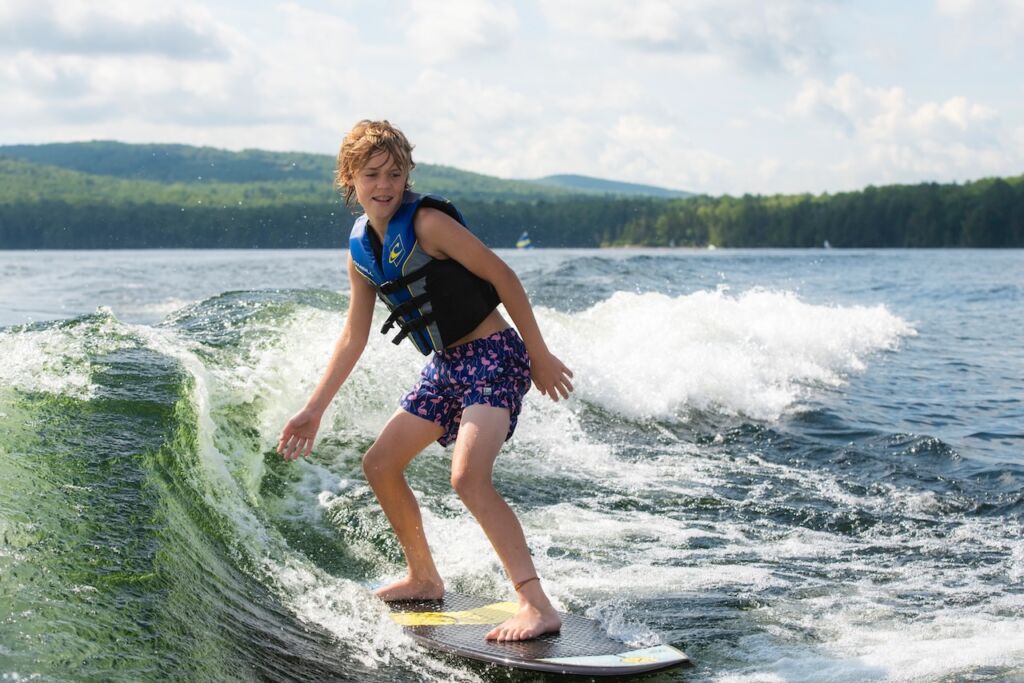
Wakesurfing is a water sport where a rider surfs on the wave created by a boat on a small surf board. After the rider learns the basics of getting pulled out of the water by the boat, they can learn to drop the rope and surf the wave, carving, and even tricks, just like ocean surfing.
Wakeboarding, on the other hand, is more like water skiing or snowboarding on water. Riders are always attached to the boat by a rope and rely on speed and tension to stay upright and jump over the wake.
- How did you first get interested in wakesurfing?
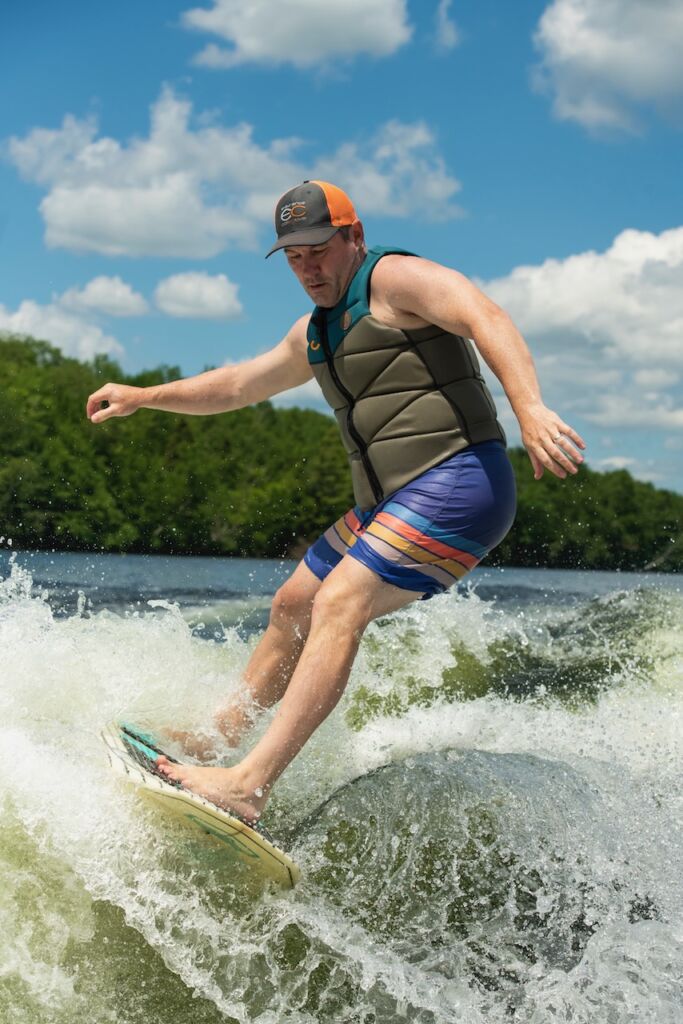
Nathan first tried wakesurfing in North Carolina in 2017 through a friend of a friend, and was immediately hooked. He loved the quick learning curve, fluidity, and connection to the water. And since the boat goes slower, the falls aren’t jarring to the body, which is important as you get older.
Our family got a wake boat in 2020, and we spent a lot of time on the water (what better way to stay outside and socially distant during COVID?!). We really enjoyed all the time we spent on the boat, but what really hooked us was how much fun it was teaching others and seeing them succeed. When Rob and Mike mentioned that they were considering bringing wakesurfing to Kingswood, we were very quick to volunteer!
- How many years have you been teaching wakesurfing? How many campers have you taught? What is your “success” rate?
We started the wakesurfing program at Kingswood, what we lovingly call “The Tarleton Surf Club”, in 2022.
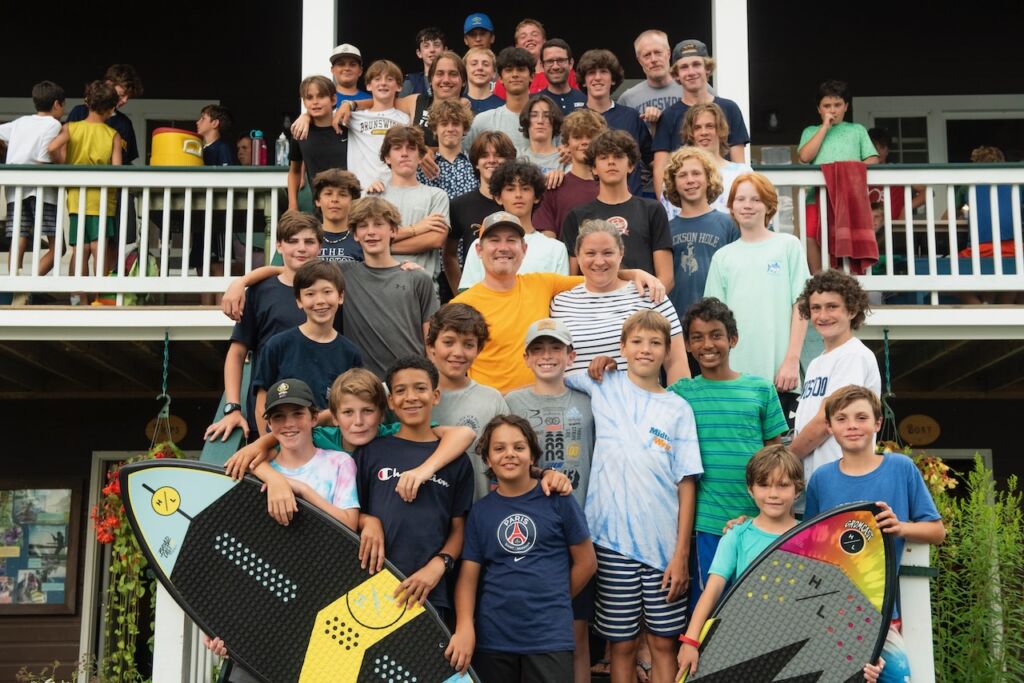
Since the program’s inception, any Kingswood camper who has wanted to learn has had the opportunity to take the wakesurf clinic. We taught close to 100 kids over the first summer and had a nearly a 100% success rate of kids learning to get up out of the water and ride behind the boat. Every year since has been similar, but with many more returning campers progressing in their skills.
- Do you need a special boat to wakesurf? Tell us a little more about the Kingswood wakesurf boat? How does it work?
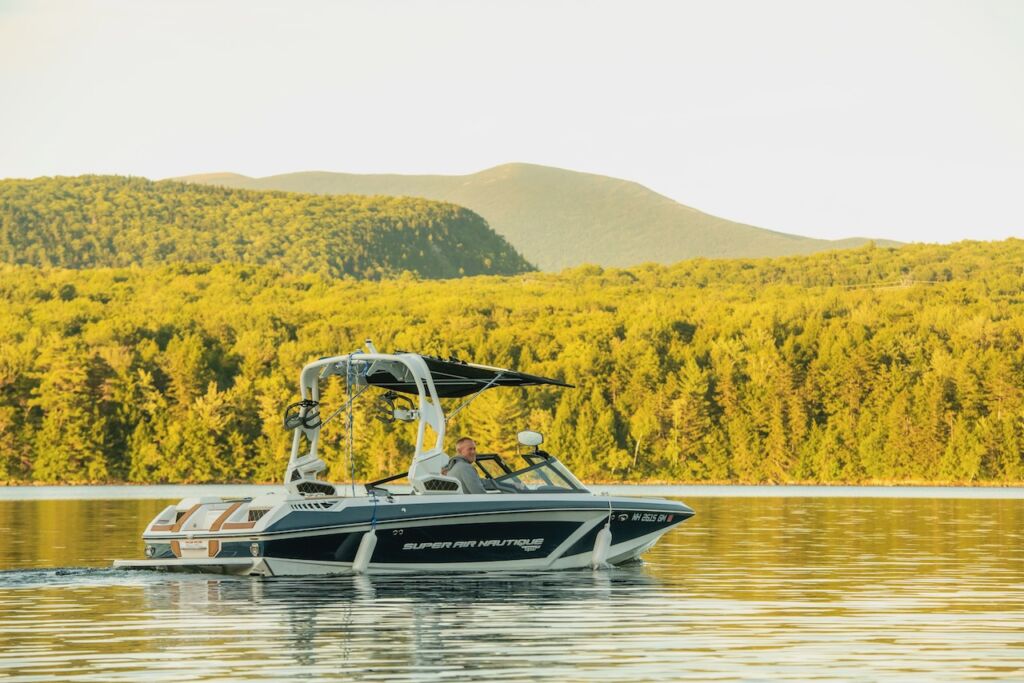
Yes — wakesurfing works best behind a boat that’s specifically designed to create a clean, surfable wave. Wakesurf boats use an inboard-engine with the propeller tucked underneath the boat and well away from the surfer. This design makes the wave safe to surf on.
At Kingswood, our Super Air Nautique GS20 is set up with all the features we need to give campers the best possible experience. To shape a perfect wave in real time, the boat maintains a steady wakesurf speed (typically between 10-12 mph) and uses Nautique’s integrated surf system, combining driver-controlled wave-shaping plates, with ballast tanks that fill with water to increase displacement. Our experienced drivers can fine-tune the speed, acceleration, and wave shape to be just right for each camper, creating a more mellow and forgiving wave for beginners or a steeper and more powerful wave for advanced riders ready for a challenge.
- Is wakesurfing dangerous? Difficult?
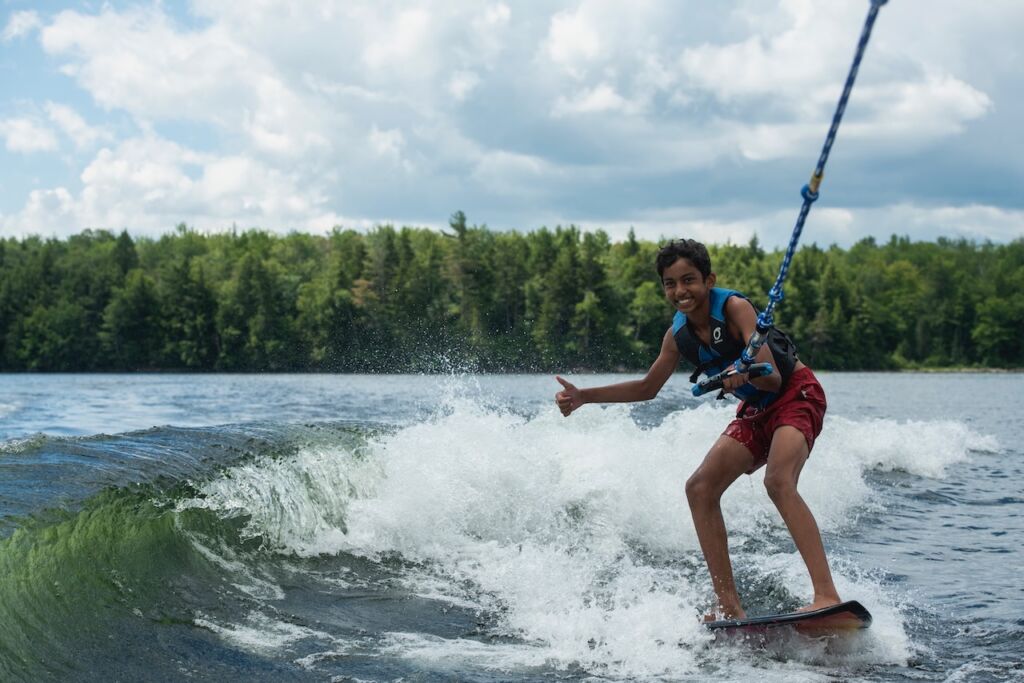
Wakesurfing may look impressive, but when it’s taught correctly, it’s actually one of the safer and more approachable water sports we offer at camp.
Because the boat travels at a slower speed than wakeboarding or water skiing, the water is calmer and falls are typically gentle.
As for difficulty, wakesurfing is surprisingly accessible. Most kids are able to stand up during their first or second session, which builds confidence right away. From there, progression happens naturally. Campers learn balance, posture, and small adjustments that help them ride longer and with more control. No prior water sports experience is required.
That said, wakesurfing is still a challenge in the best way. It builds focus, patience, and effort. Some campers are mastering the basics and learning how to ride without the rope, while others enjoy pushing themselves toward carving and tricks. There’s no pressure to “be great”, just encouragement and support to try something new, improve at your own pace, and have fun.
- What advantages does wake surfing have over waterskiing?
Obviously we’re tremendously biased, but we think wakesurfing has two unassailable advantages over water skiing and wakeboarding.
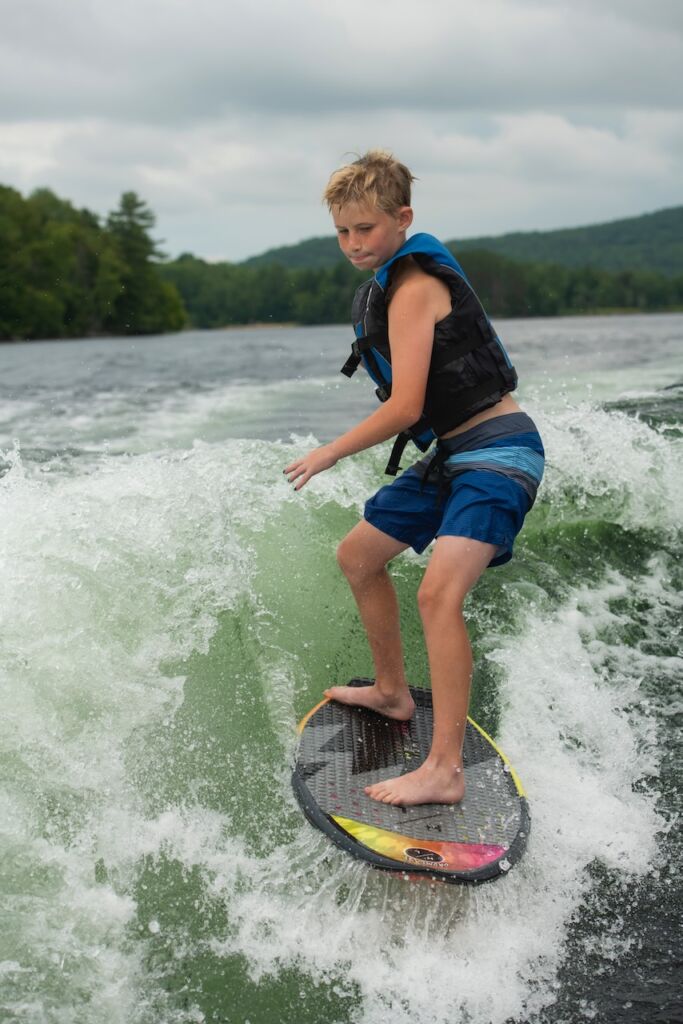
First, it’s much easier on the body. The boat moves at a slower speed and you’re not constantly being pulled by a rope or strapped to a board. That means falls are gentler, muscles don’t fatigue as quickly, and riders usually finish feeling energized instead of worn out.
The second advantage is the social side. Wakesurfers ride closer to the boat, so it’s easy for everyone onboard to watch, cheer, coach, and celebrate. Every run feels like a shared experience, not a solo attempt. That sense of connection is a huge part of why kids love it.
- What techniques do you employ to teach first timers how to wakesurf?
We teach wakesurfing the same way we approach most things at camp: step by step, with patience, encouragement, and lots of repetition. Our goal is to help every camper feel safe, supported, and successful from their very first attempt.
Before anyone gets in the water, we start with a simple, on-boat explanation. Campers learn how the board works, what their body position should feel like, and what to expect when the boat starts moving. We keep the language clear and age-appropriate—no overload, just the essentials.
In the water, we focus on a few key fundamentals:
- Letting the boat do the work
- Standing up slowly rather than “popping up”
- Using small adjustments instead of big movements
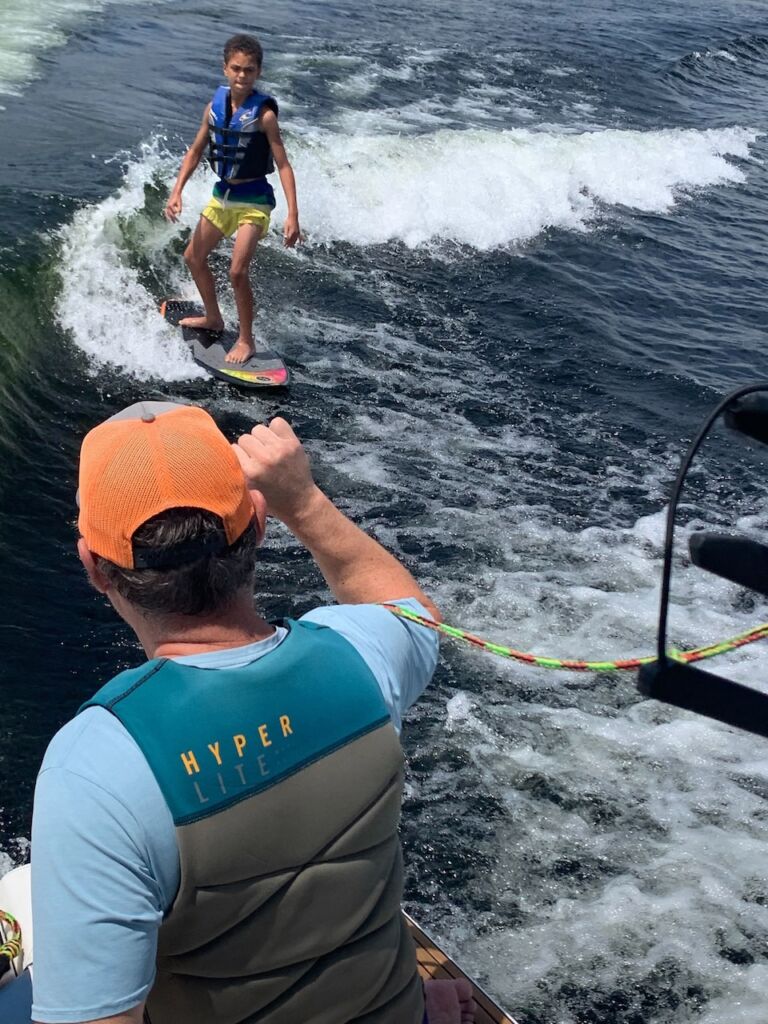
We also coach continuously from the boat. Campers hear calm, specific cues in real time, which helps them make quick corrections and stay relaxed. If they fall, we reset quickly and talk through what to try differently next time.
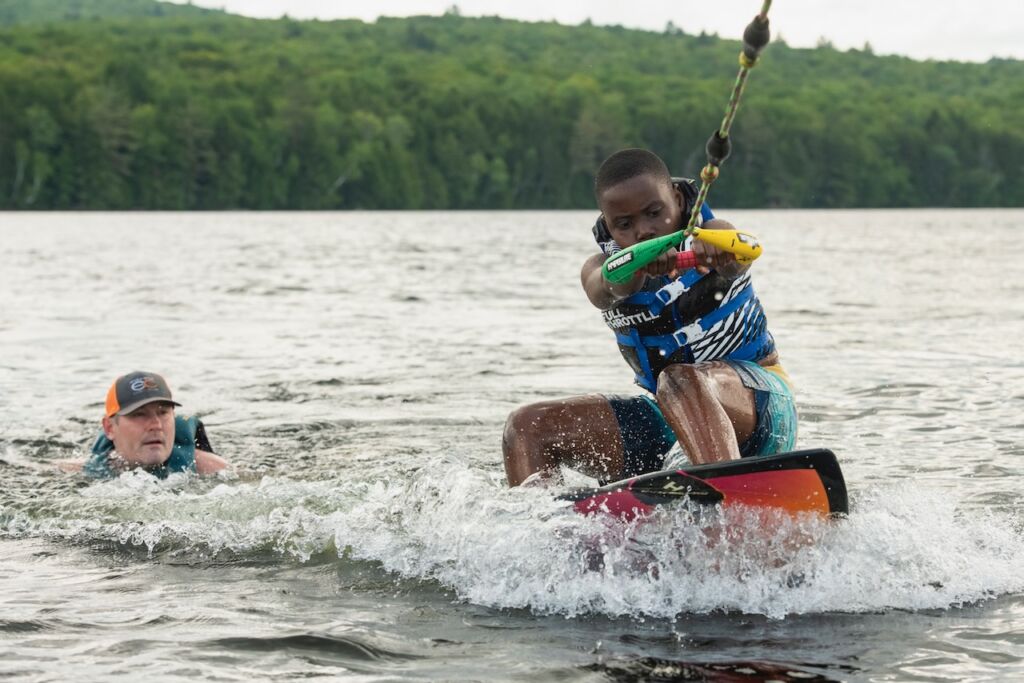
If a camper is having trouble getting up, Nathan will get into the water to help with foot placement, rope grip, timing, and to talk them through what’s happening as the boat accelerates. This extra support will often lead to success.
Just as important, we create a positive learning environment. Campers cheer for one another, celebrate small wins, and see progress modeled by their peers. By breaking the sport into manageable steps and focusing on early success, most first-time wakesurfers are standing and riding sooner than they ever expected, and that confidence often carries over into other areas of camp.
- How does one progress at wakesurfing? How does it stay fresh over time?
One of the best things about wakesurfing is that progression happens naturally, at every level. There’s no single finish line. Whether a camper is brand new or returning for their fifth summer, there’s always something new to work toward.
Early on, progress looks simple but meaningful: standing up consistently, riding longer, finding balance, feeling the push of the wave, and dropping the rope. From there, campers start learning to control speed by moving closer to or farther from the boat, shift their weight, and carve.
What keeps wakesurfing fresh is that progress is personal. One camper might be thrilled to ride the entire length of a song. Another might be working on clean turns or popping an ollie (a brief jump without holding the rope or leaving the wake). Both are meaningful progress and both are celebrated.
- Are there different types of boards campers can use?
Yes. One of the ways we help campers progress and stay excited about wakesurfing is by matching them with the right board for their size, ability, and goals.
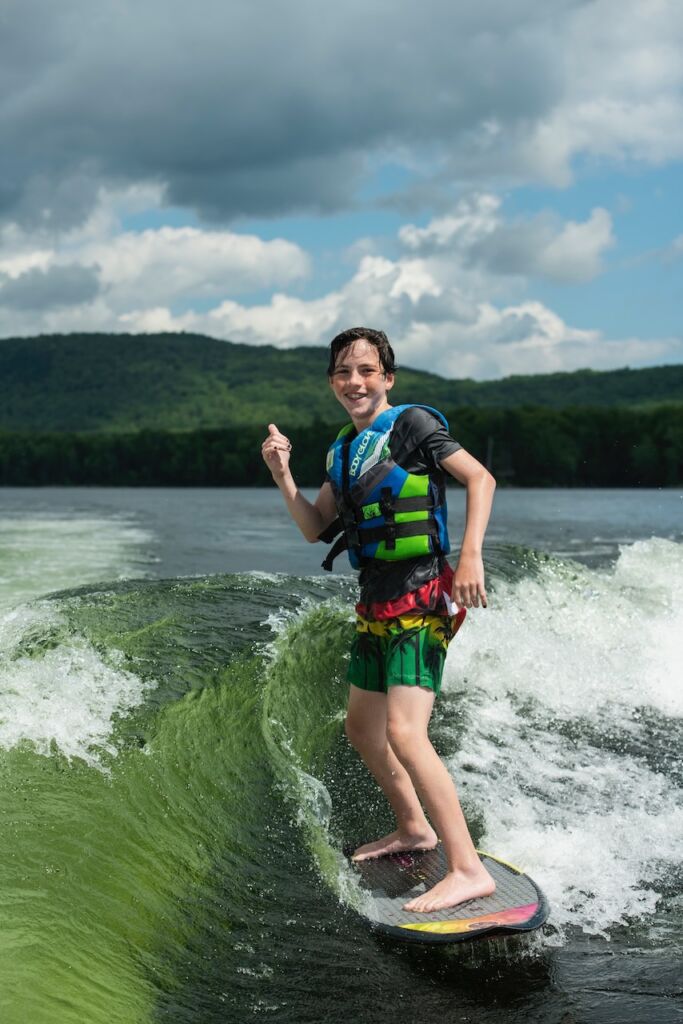
Beginners start on one of our three stable boards selected for them based on their height and weight. These boards have extra volume and a wider shape, which makes it easier to stand up, balance, and ride the wave. Early success matters, and the right board makes a big difference.
As campers gain confidence, they can move to smaller or more responsive boards. These turn more easily, feel faster on the wave, and allow for more control and progression like carving, riding farther back on the wave, or small tricks. We also have boards with different fin setups, which subtly change how the board feels in the water. Some provide extra stability, while others encourage sharper turns and quicker movement.
Campers don’t need to understand all the technical details as we help guide those choices based on what we see on the water. The goal isn’t to rush or overwhelm anyone, it’s to give each camper equipment that helps them feel confident, challenged, and excited to get back out on the water and keep progressing. Over time, switching boards becomes part of the fun, and another way campers can see how far they’ve come.
- How many campers can take wakesurfing clinic per week (per age group)? What do campers do when they are in the clinic but not behind the boat?
We keep wakesurfing clinics small and focused so every camper gets personal attention, plenty of time on the water, and a safe experience. We run sessions by age group (Juniors, Intermediates, Seniors), and each group is limited to 8 campers with typically smaller groups for the Junior level.
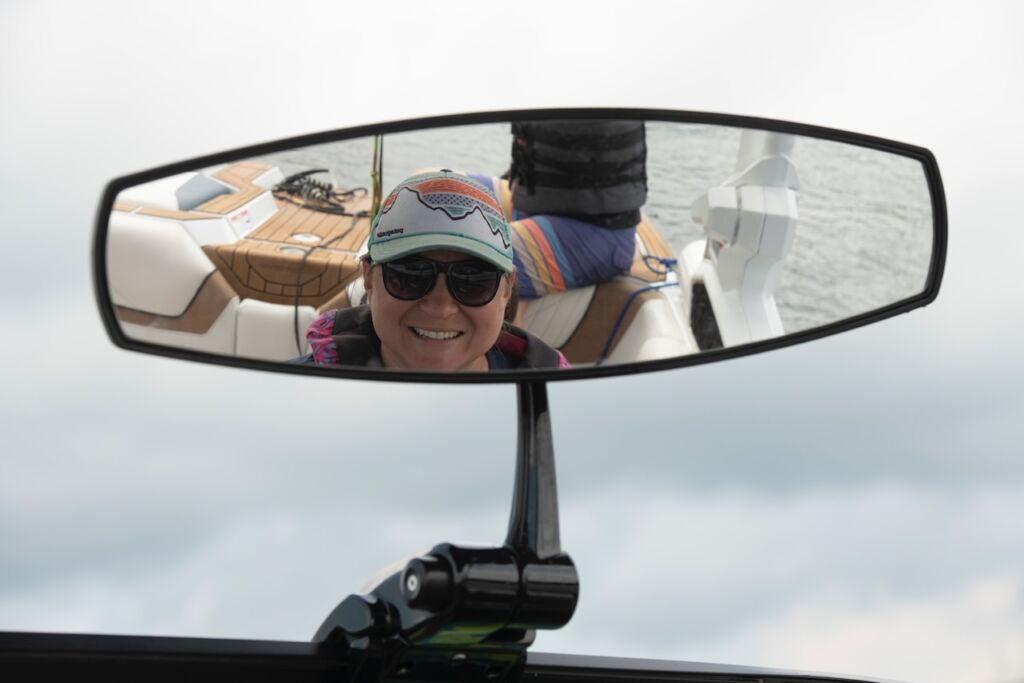
While one camper rides, the others watch, cheer, and learn from the boat. Being close to the action helps campers pick up technique quickly. Riders rotate throughout the session, so everyone stays engaged, keeps learning, and has fun even when they’re waiting for their turn.
- How do you make sure that the wake created by the boat doesn’t impact the shoreline or other crafts and clinics happening on the lake?
At Kingswood, safety and respect for our environment and others are top priorities. The wakesurf boat travels at a slower speed, and our experienced drivers carefully manage its path, speed, and ballast to keep the wave contained in the middle of the lake and away from the waterfront where other boats and swimmers can enjoy calmer waters.
Because our drivers and instructors are experienced, we maintain a constant watch on all activity on the water. Even when multiple waterfront activities are happening at once, each group has its own space, and we use our radios to communicate closely with staff to make sure everything runs smoothly and safely.
- What’s the best part of your job (wakesurf instructor)? / What do you like most about teaching wakesurfing?
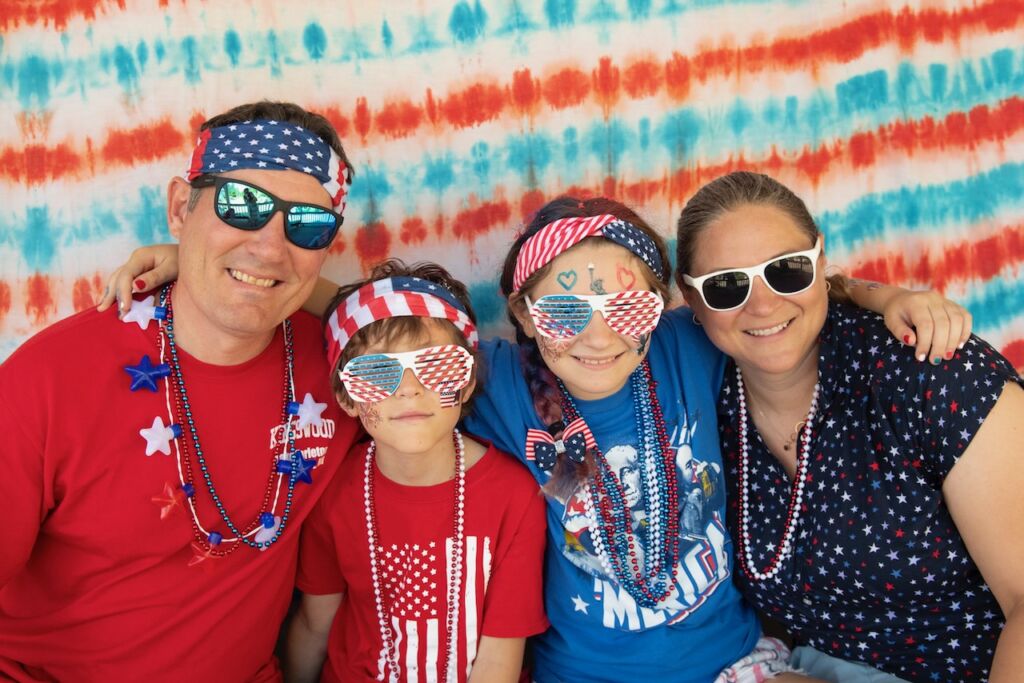
The best part of the job is watching a kid stand up on the board for the first time, seeing their face light up with pure joy, and knowing you helped them achieve it. It’s like a version of watching your own kid take their first steps or ride a bike for the first time. It never gets old and is always so gratifying.
We also love seeing campers support each other, celebrate small victories, and keep trying when they fall. They’re learning perseverance, confidence, and community. And we get to guide and watch them along the way.
And of course, being on an awesome boat with your spouse in one of the most beautiful places in the world is pretty much a dream job! We couldn’t imagine how else we’d want to spend our summers.
When we started wakesurfing, we quickly realized how perfectly it fits with Kingswood. It rewards patience, listening, and effort. It builds confidence fast, but also has plenty of opportunities for kids to challenge themselves. And maybe best of all, it creates community – one camper riding the wave while the rest of the boat cheers on.